
The Hydrogen Value Chain
Creating a sustainable NET ZERO energy supply.
Co-Benefits of Renewable Hydrogen Production
In Africa, the potential applications and benefits of renewable energy are almost limitless, creating the possibility that the production and export of green hydrogen and its derivatives will not only drive economic growth, but also contribute to achieving sustainable development goals.
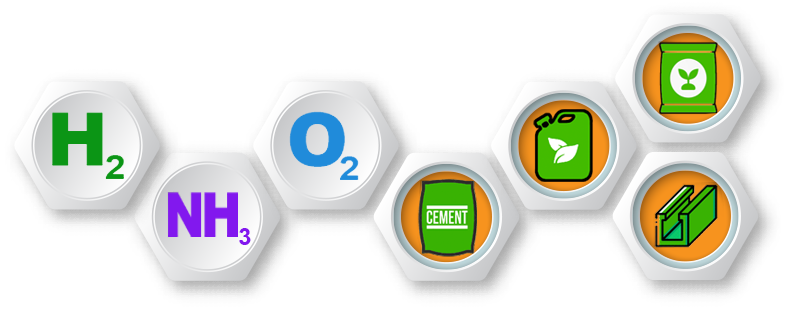
Green hydrogen production has the potential to yield multiple benefits such as producing a Green Hydrogen Value Chain: Green Hydrogen / Green Oxygen / Green Ammonia / Green Fertilizers / Green Synfuels (E.g. Green Methanol), Green Cement, Green Steel, together with various other green industries.
These developments will be creating jobs, expanding access to clean energy, and fostering green industrial development, while advancing a just transition to a Net Zero carbon emission footprint. Various agreements and new partnerships between developing countries and those that could import in the future characterise this as a win-win solution. Industrialised nations get green hydrogen and commodities, while developing countries gain investments, jobs and technology transfers in return.
While the complexity of the hydrogen value chain may seem intimidating, we are ready to demystify this multifaceted ecosystem. Our team of experts will unpack the challenges surrounding integration, infrastructure, microgrids, and the increased demand driven by green hydrogen production.
In addition, Hydrogen and Ammonia, like Natural Gas, can be stored over seasons and serves as a cost effective dispatchable source of a 24/7 long term bulk energy storage system.
Promoting Strategic Partnerships at both Global and Inter-regional Levels.
Hydrogen and its derivatives will be essential for reaching net-zero – by reducing emissions in challenging sectors, with ammonia expected to make up around 80% of hydrogen use by 2050. Ammonia is a varied molecule essential for food and energy security, thus making its production a strategically significant issue globally.
Currently the majority of all hydrogen produced globally, is used in the production ammonia. Most of this ammonia production (approximately 85%) is utilised in the agricultural industry in the form of chemical fertiliser, including urea, ammonium phosphate, ammonium nitrate and other important chemicals including nitric acid, hydrazine, cyanide and amino acids.

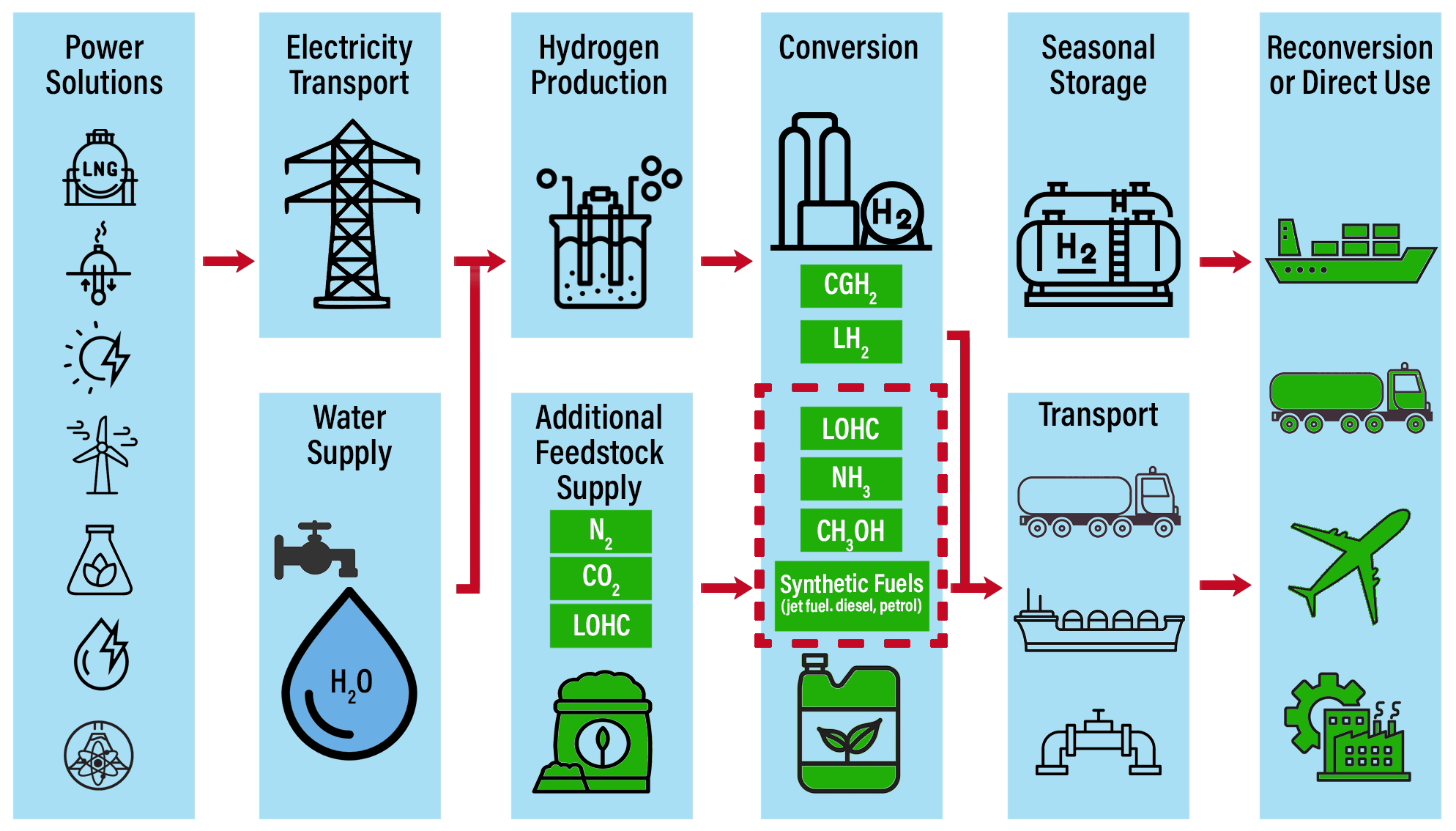
The general components of a basic green hydrogen supply chain. Parts of which may change due to client requirements and resources.
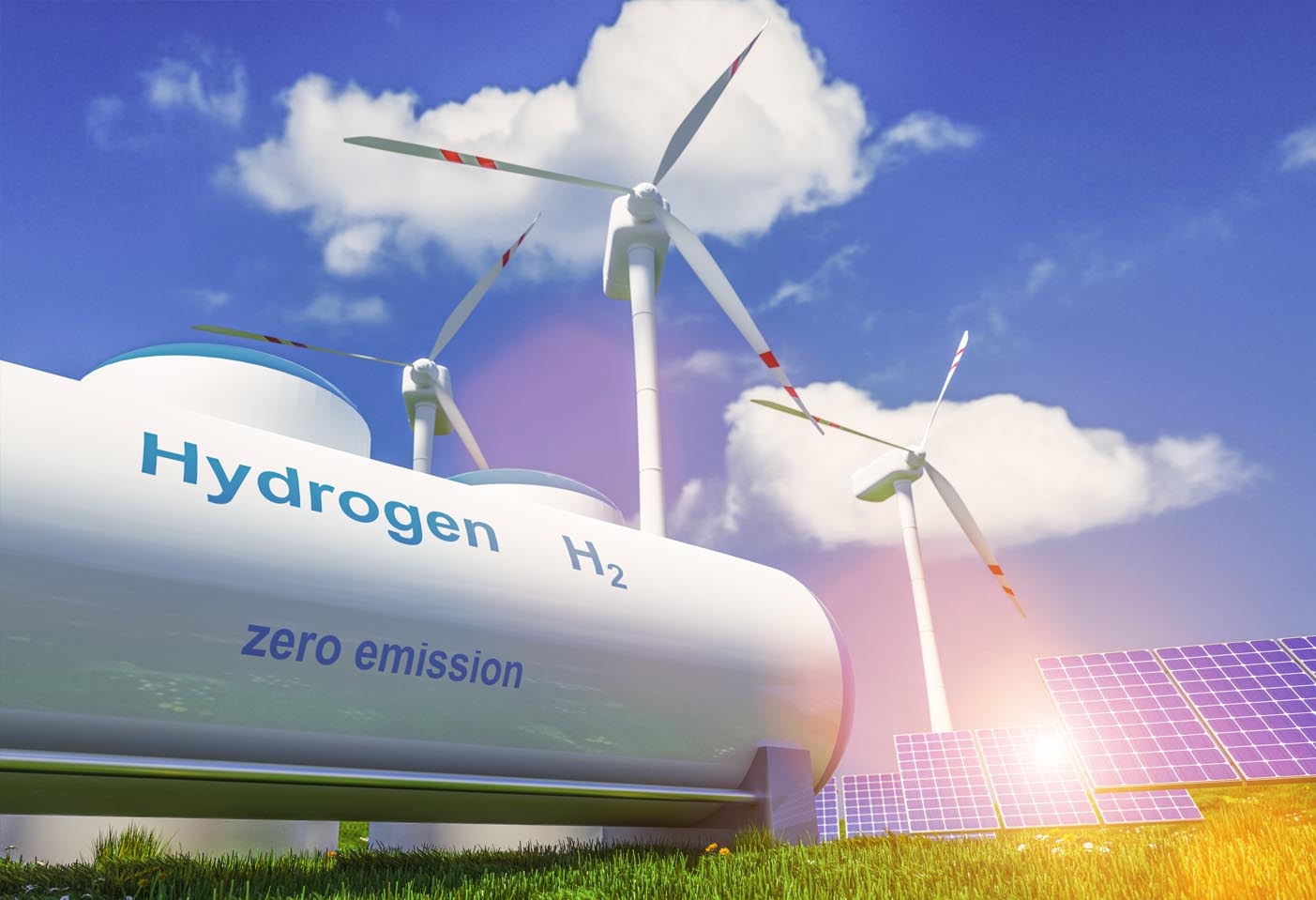
Renewable Green Hydrogen Production
The global demand for hydrogen was about 70 million metric tons (Mt)3 per year since 2019. Half was used to make ammonia and fertilizers; half in petrochemical refineries or production. There are 169 hydrogen projects currently operational globally across 162 countries.
Hydrogen Production
Hydrogen is generated using various methods, contributing to its diverse functions in the H2 value chain. A globally recognized colour-based system is utilized as a shorthand naming–method for identifying production pathways.
- Grey (or black): Gasification of coal or reforming of natural gas without carbon capture.
- Blue: Reforming of methane (SMR) with carbon capture and storage.
- Green: Electrolysis of water using renewable power like wind, hydro or geothermal wells.
- Yellow: Electrolysis of water using solar power.
- Pink (Red): Electrolysis of water using nuclear or fission-enhanced geothermal wells.
- Turquoise: Pyrolysis of methane which produces hydrogen and solid carbon as a by-product.
- White: Gasification or other process using 100% biomass as a feedstock.
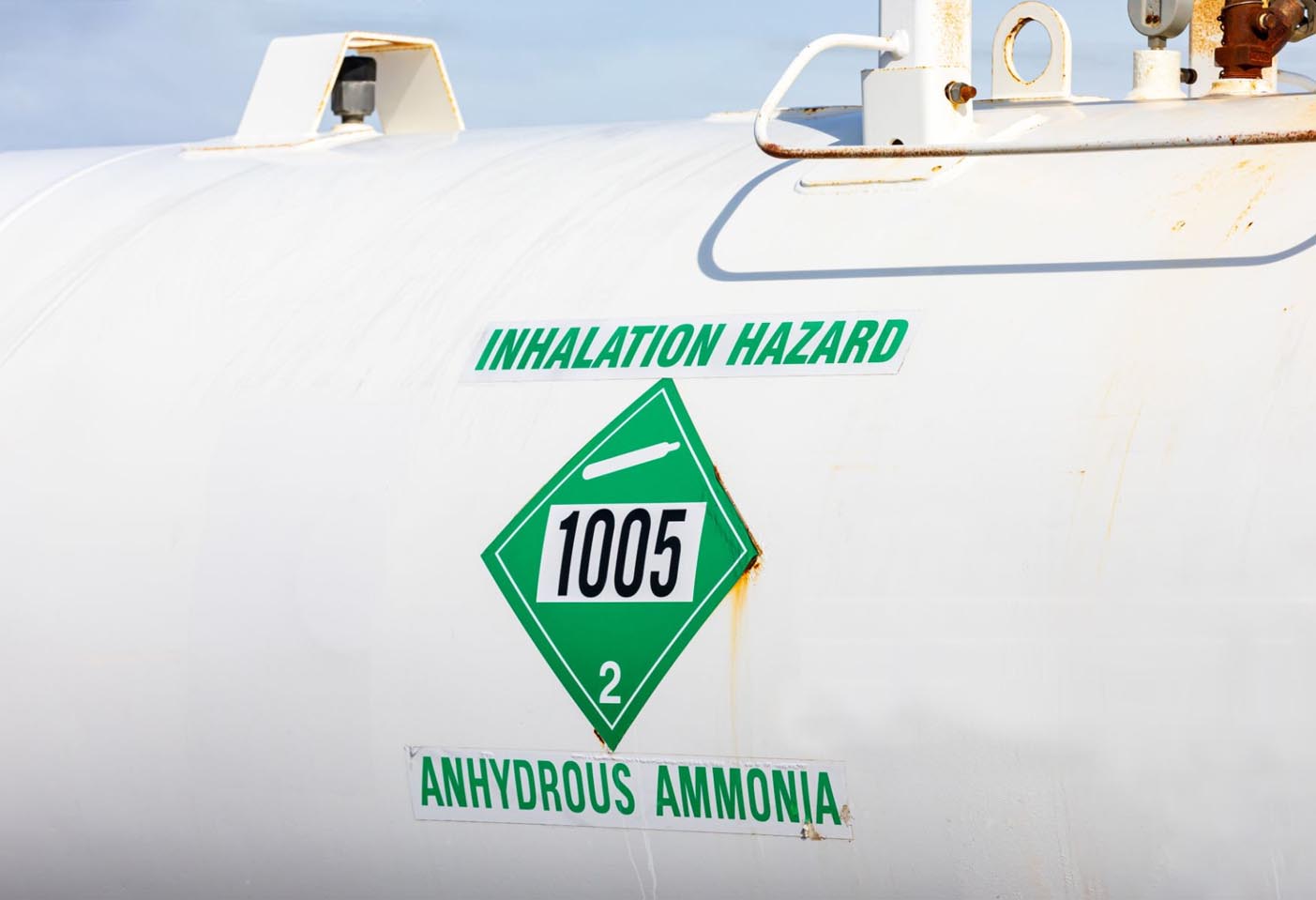
Ammonia
Ammonia is produced by combining hydrogen with nitrogen. Ammonia is a key ingredient in the production of agricultural fertilizer, helping to increase crop yields that feed billions of people each year. Anhydrous Green Ammonia is the most prominent: it can be stored and transported as a liquid and used as a gas. When made with low-carbon hydrogen, it becomes a cleaner fuel and an efficient carrier for transporting hydrogen globally.
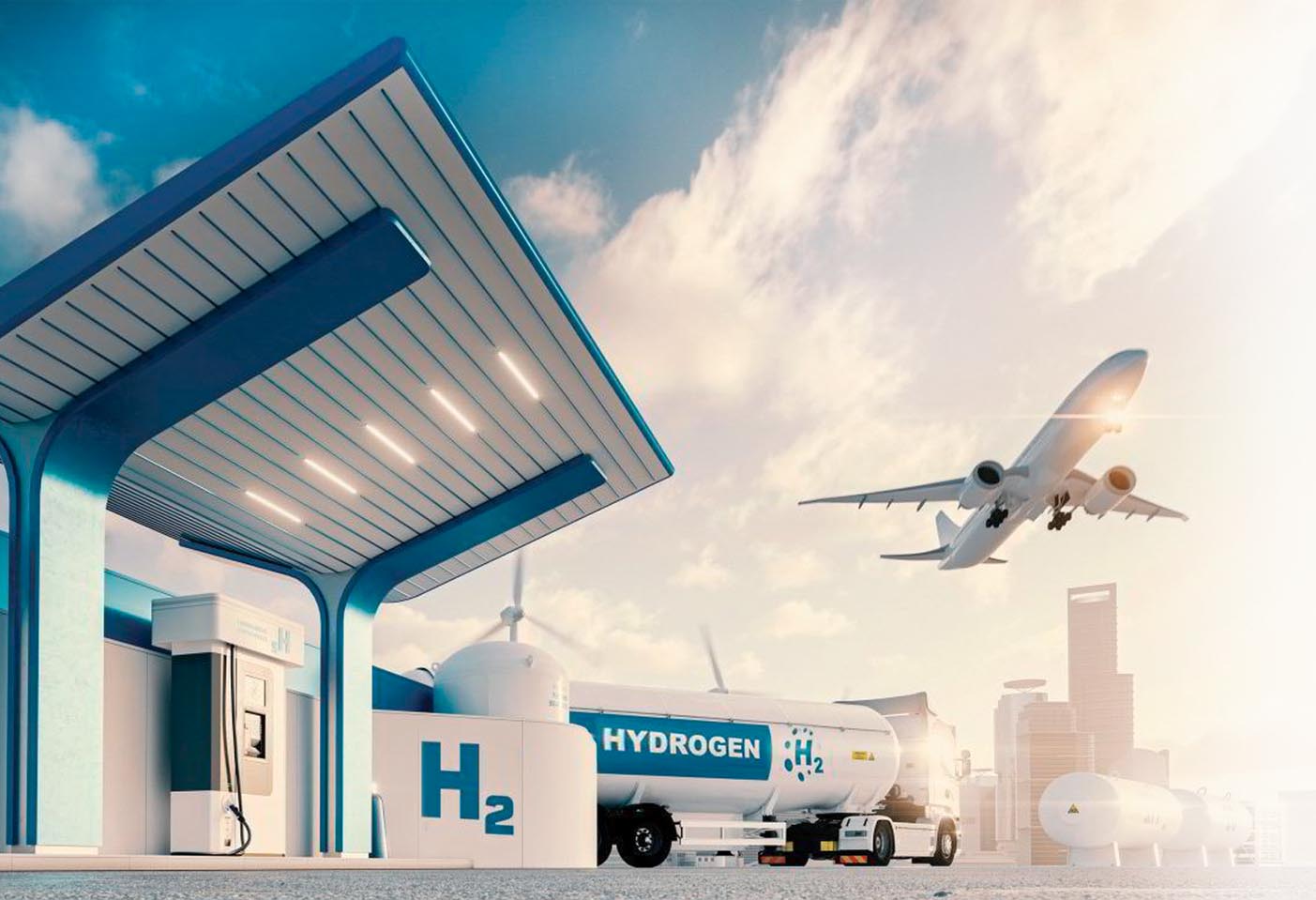
Synthetic Fuels
Synthetic fuels, also known as e-Fuels, can be produced from hydrogen. One e-Fuel attracting growing interest is methanol, which also requires hydrogen as well as carbon. This can be sourced from biogenic (natural) sources or it could be pulled from the atmosphere using direct air capture (DAC).